As a kid, deep-sea creatures scared me too much to love them. My sister and I used to look through National Geographic magazines and would turn the pages together when we knew we were going through a story set in an ocean or sea. We braced each other with each page turn, not knowing what was on the other side of that next underwater page. My appreciation for the deep sea only came to me as an adult, and its high-pressure life forms hooked me the same way UFOs always have: they’re real, incredible in form, and almost nobody gets a good look at them, because they’re otherworldly. Anglerfish dangle a light off their heads, gulper eels are mostly mouth, and some squid look like vampires or are clear enough to see straight through. That’s right, vampires. Possibly from outer space.
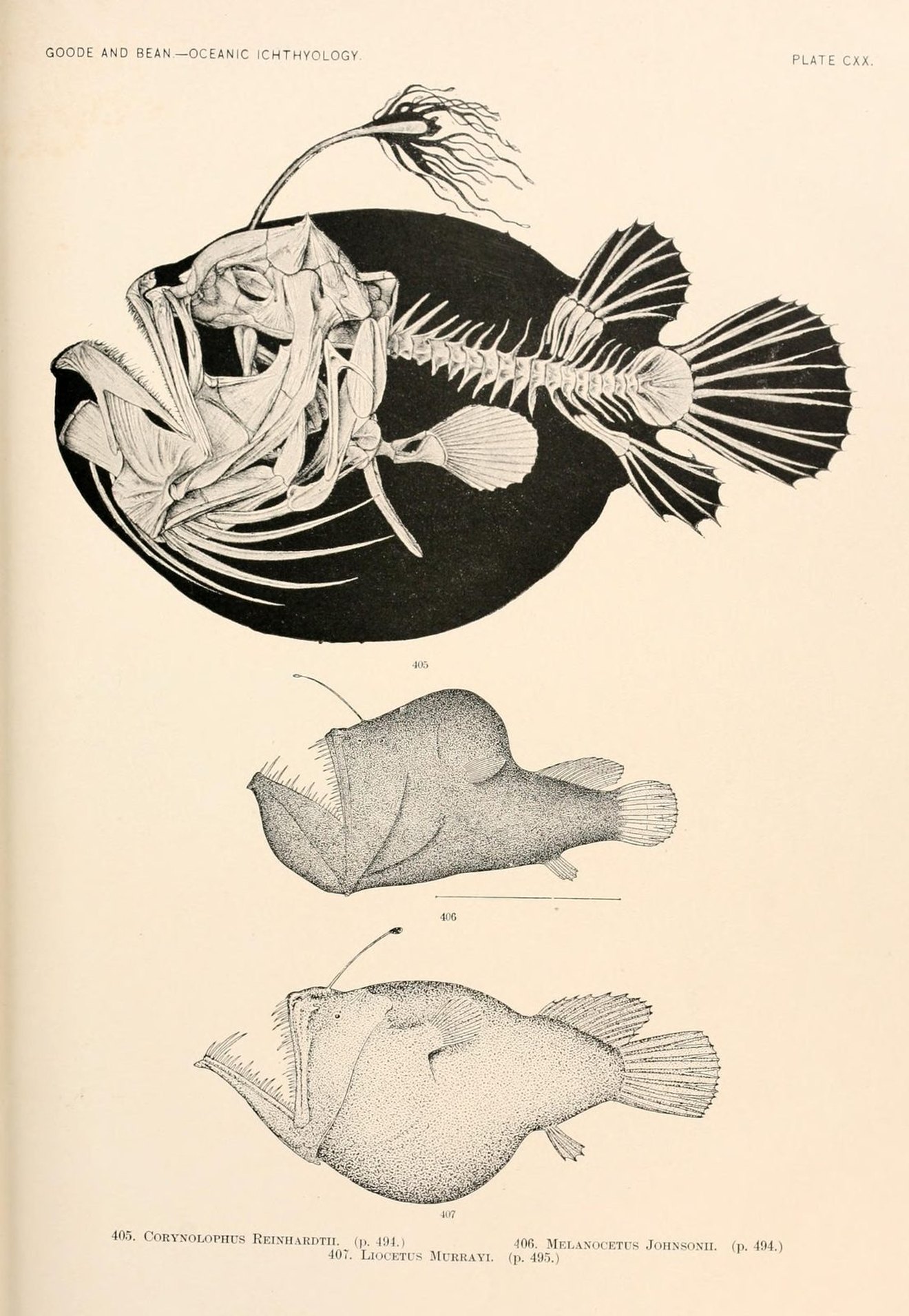
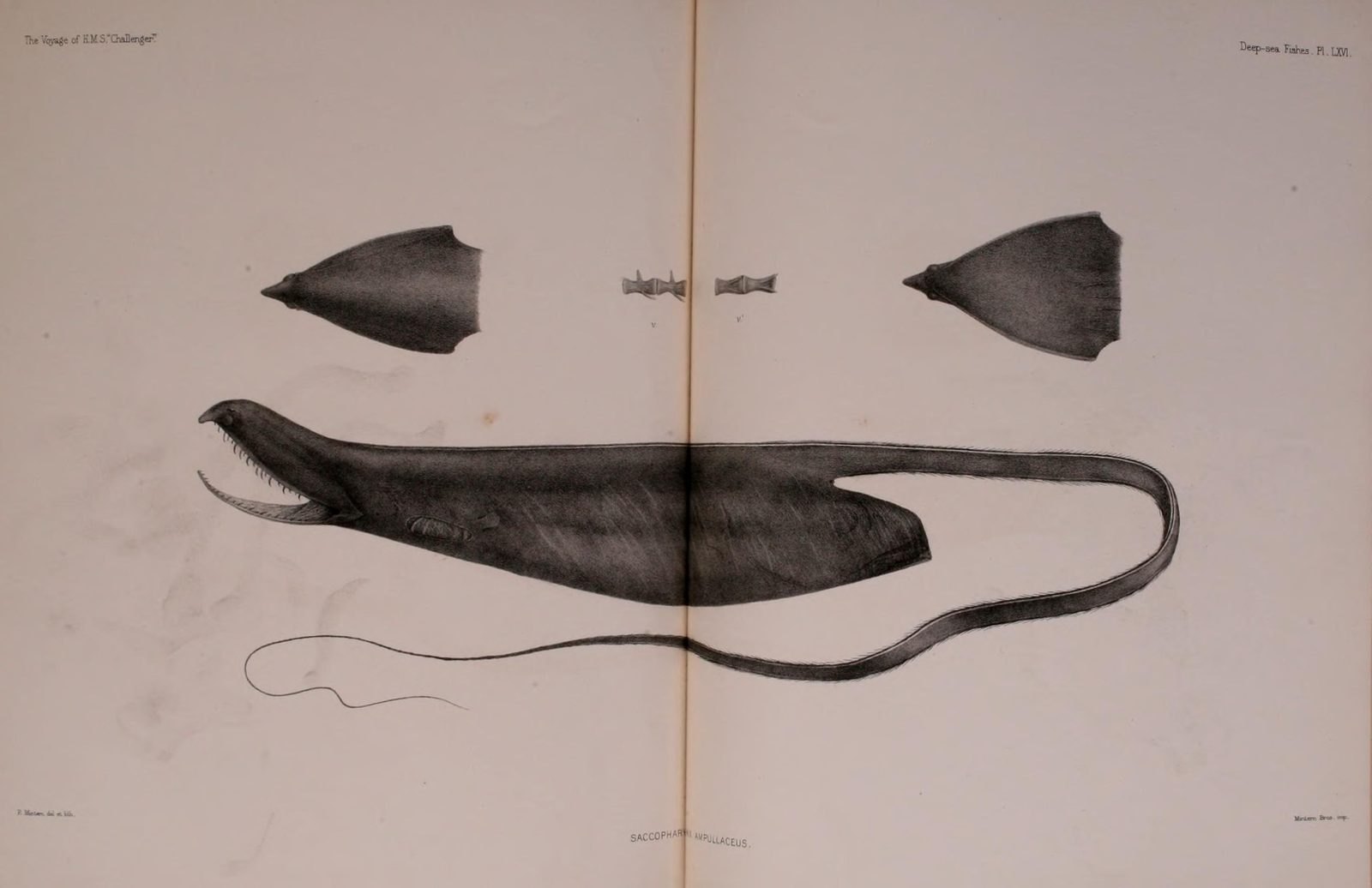
Part of the appeal is the art that documented these creatures more than a century ago, drawn by hand from things hauled up out of the dark and as delicate as anything I’ve seen hanging in a museum.
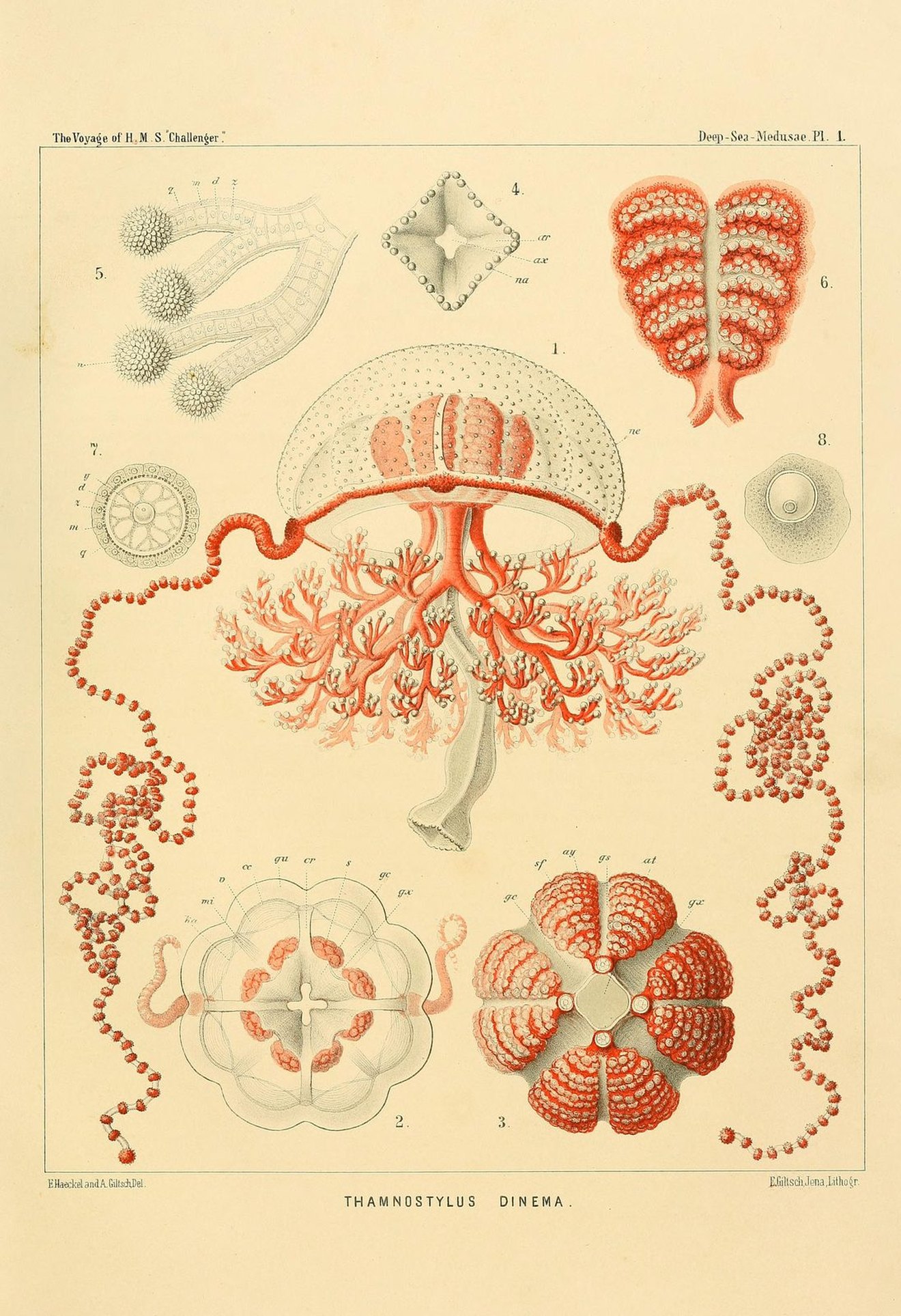
Another part of the appeal is a little morbid, I’ll admit. Most of these animals were dead or close to it by the time anyone drew them, pulled from a depth they weren’t meant to leave, and that makes the drawings stranger still. They were abducted for science.
So, the images here. All pulled from the public domain. The books are all free online, scanned page by page, but they’re hard to browse: thousands of pages across dozens of volumes, in English, German and French. I set out to pull the animals into one place, sorted by what they are, and just as reverently, filterable by the artists’ names. Anyone could wander down through these pages fearlessly. Somewhere along the way, this turned into an expedition of my own, a search for the people who drew them, and the need to give them clear credit.
Many of them were as much scientist as artist, and nearly all of them left their names in small print along the bottom of a plate and almost nothing else. Books get dedicated to people all the time. Can a website be dedicated to a whole group of people the same way? I say why not. This one’s for them.
J. J. Wild was the Challenger’s artist and, in the same job, secretary to its director, Wyville Thomson, who described him as the secretary “who sits with me.” Wild wrote about sketching while a crowd gathered to watch and an ostrich made a grab for his sketch-book, but his own book never shows him at work. Somebody on the Challenger photographed him on Kerguelen in 1874, and nobody’s sure who. That’s him at the top of this page, taken by a photographer nobody remembers, which is a spot I know well from a lot of nights behind the camera at shows.
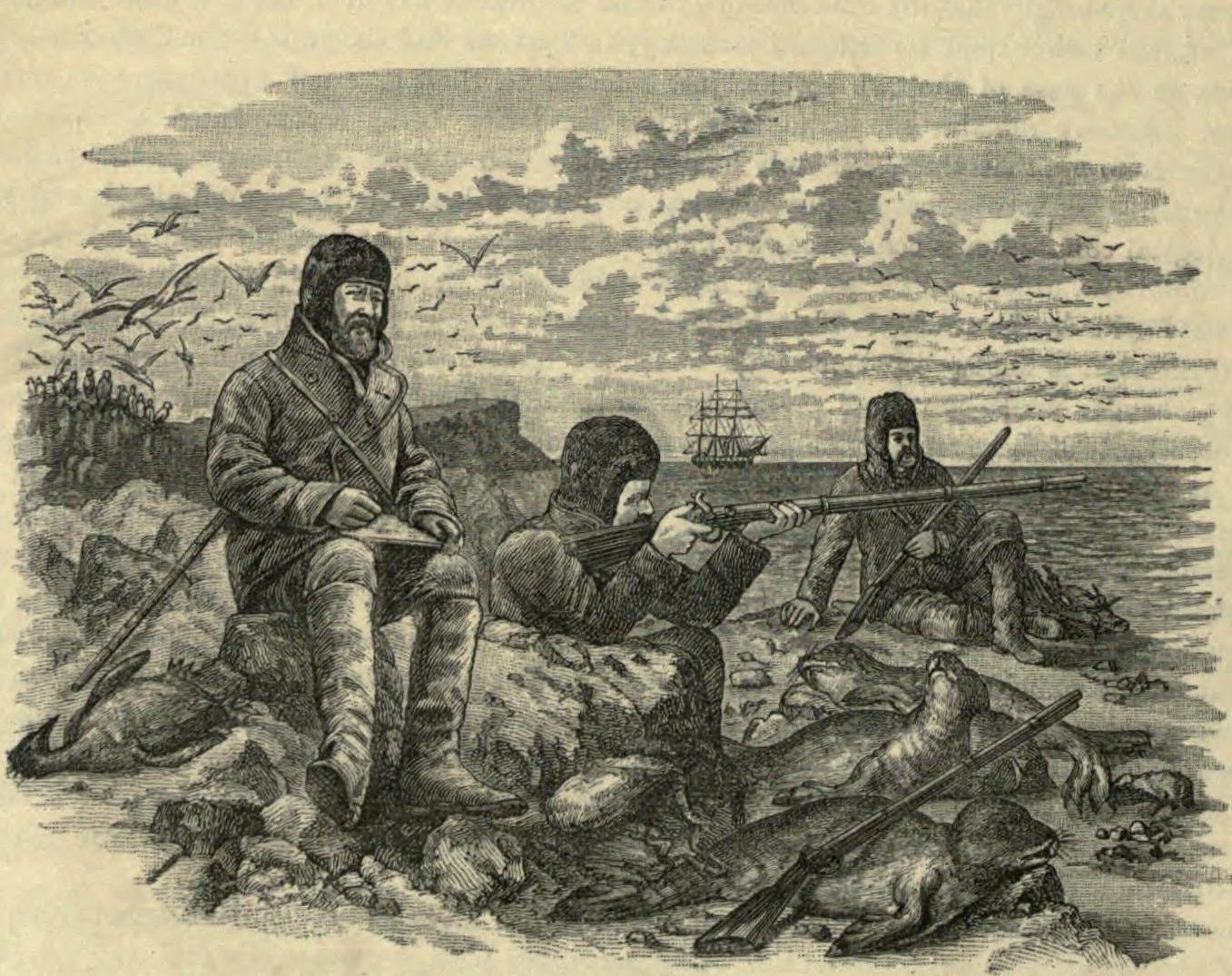
Before the Challenger ever sailed, Wild was already drawing animals. Thomson’s The Depths of the Sea, his account of the dredging cruises that came first, credits every illustration to him, glass sponges and sea urchins and sea lilies, and calls each figure “a labour of love.” J. D. Cooper cut them into wood for printing. Forty-two of them are in this archive, the oldest drawings here.
My own expedition happens on my couch, with the traffic outside my window passing for waves if I let it. William Beebe’s happened on the Arcturus in 1925, sailing for the New York Zoological Society, and he brought a staff artist, Isabel Cooper, who painted fish while they were still alive. She insisted on the living animal, even when that meant putting a snake under before she could get a microscope anywhere near its face.
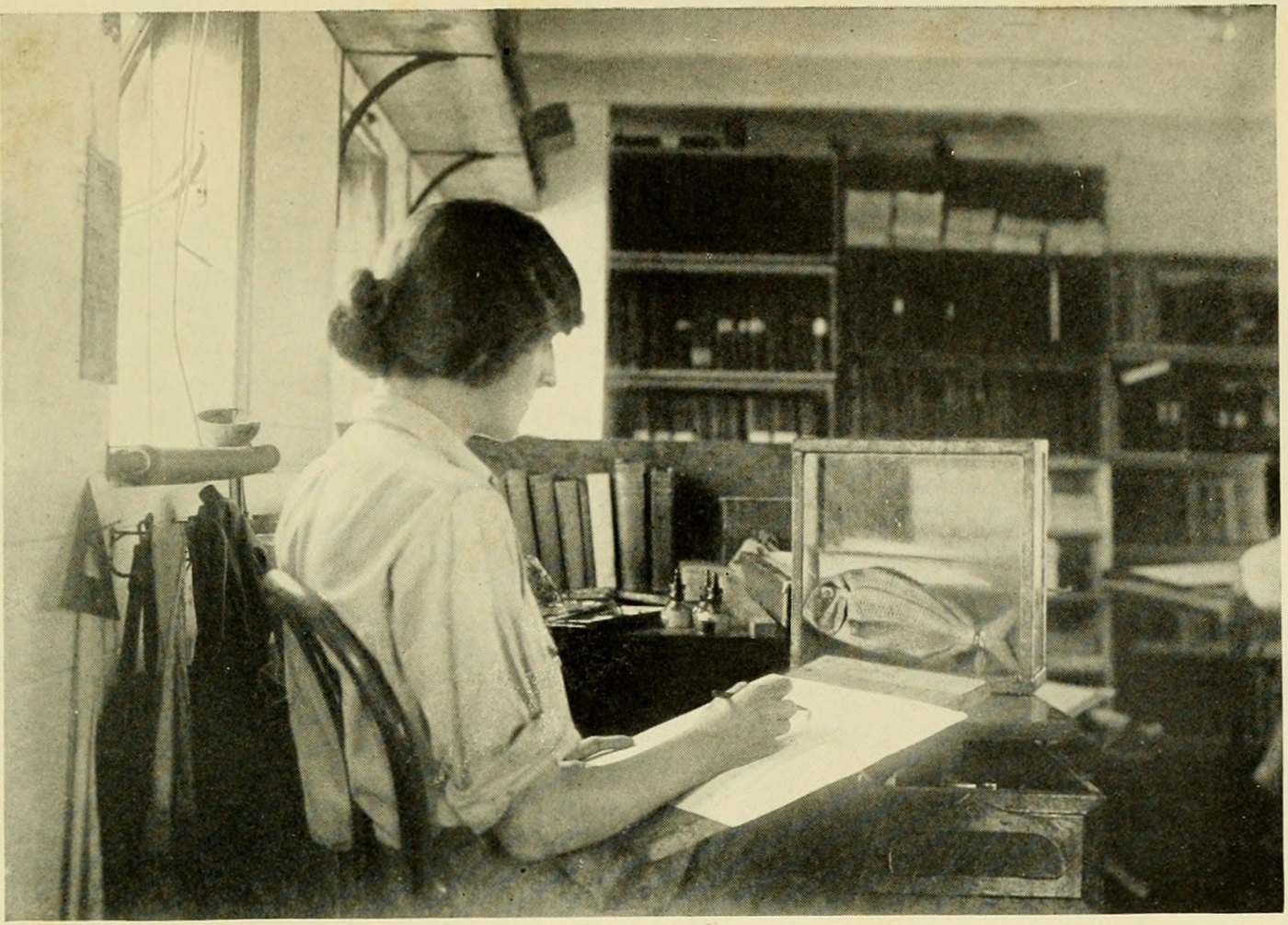
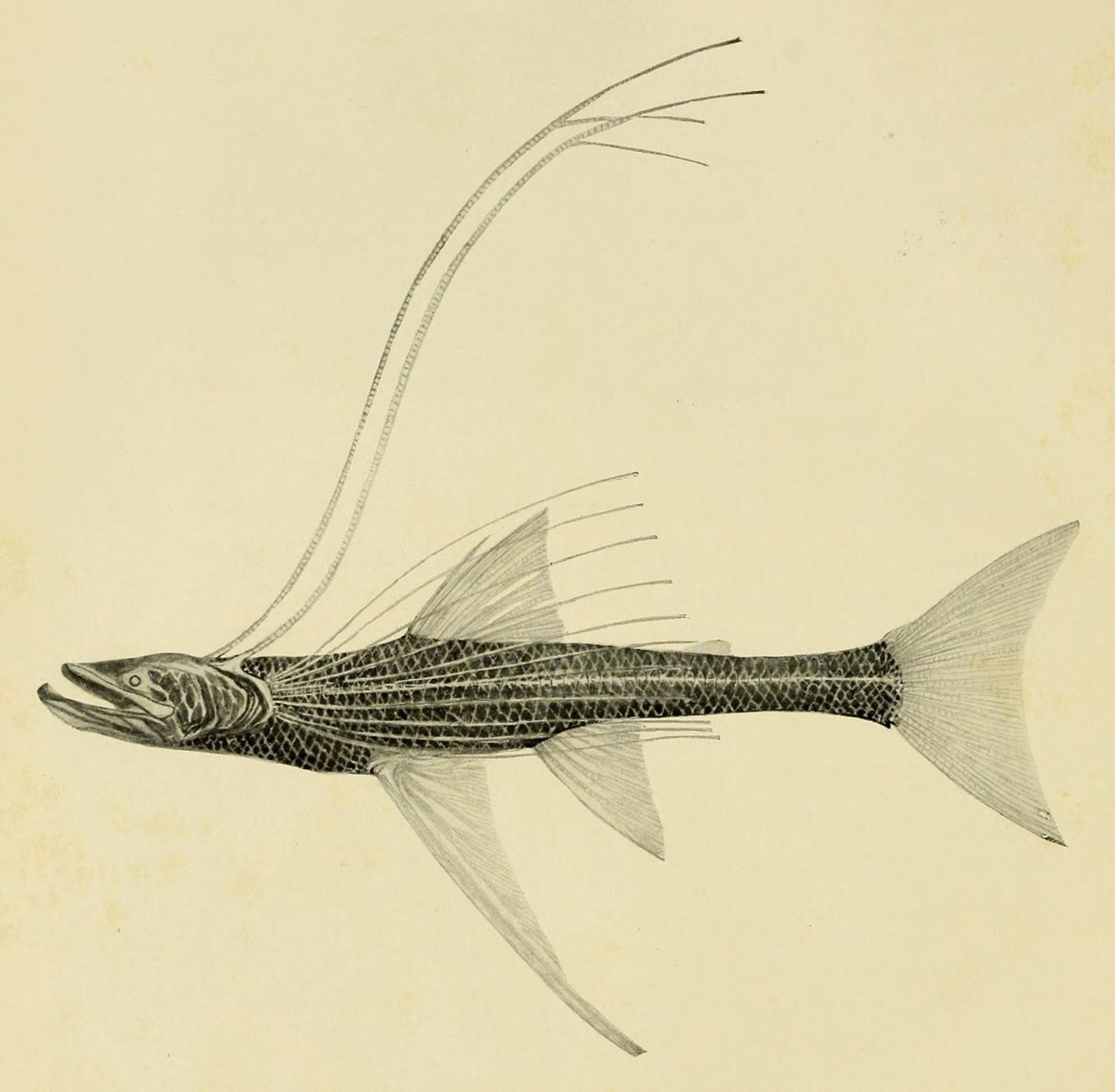
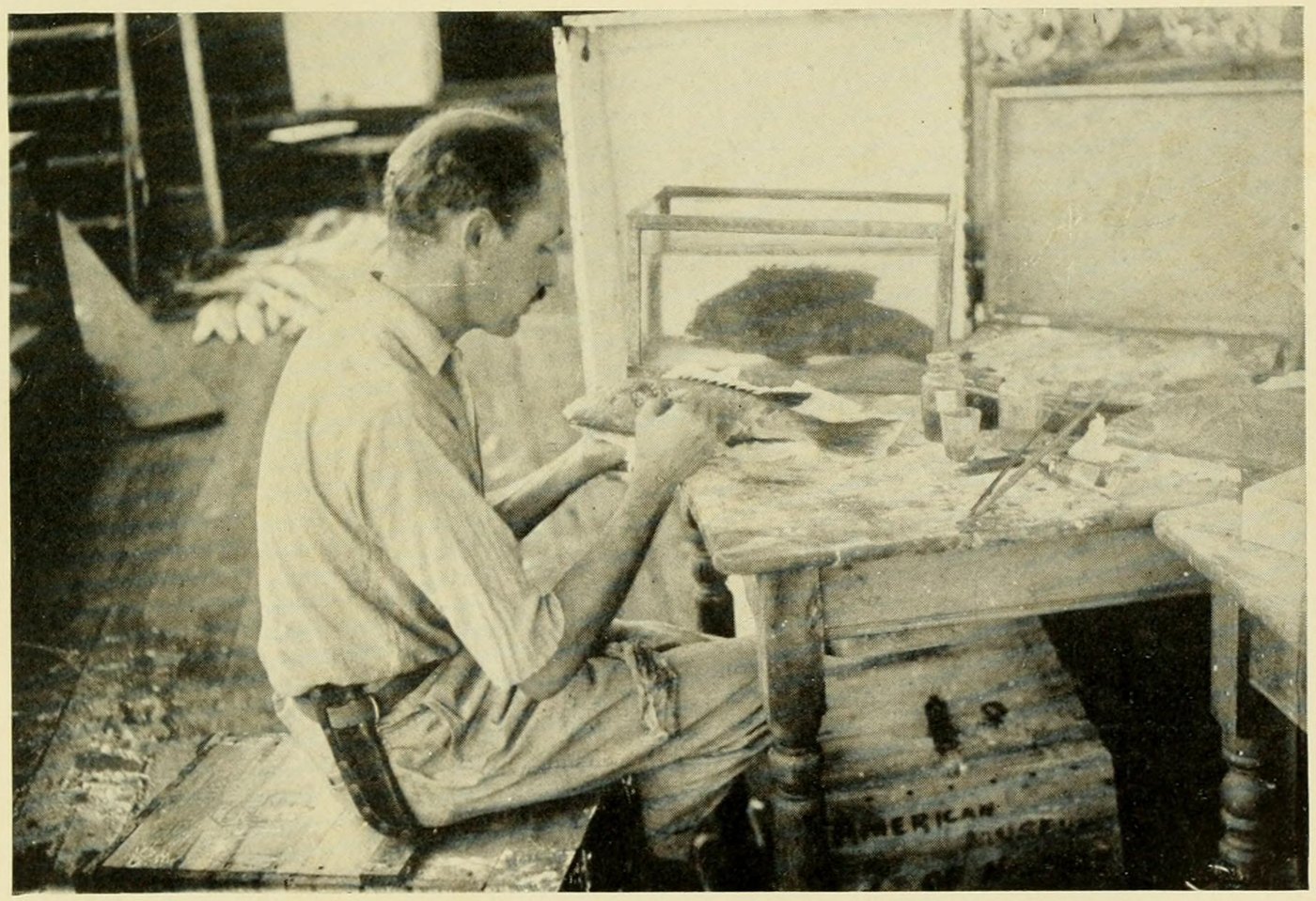
She’s the one I keep coming back to. The tripod fish on the Tripod Fish & Kin tile is hers. Beebe credits the rest of his artists by name too: Helen Tee-Van for the dragonfish, Don Dickerman for a young sunfish, and Dwight Franklin for the little sea-devil and the hatchetfish. Franklin came from the museum side, where he’d learned that a fish in a jar loses its color and tells you little about the living thing.
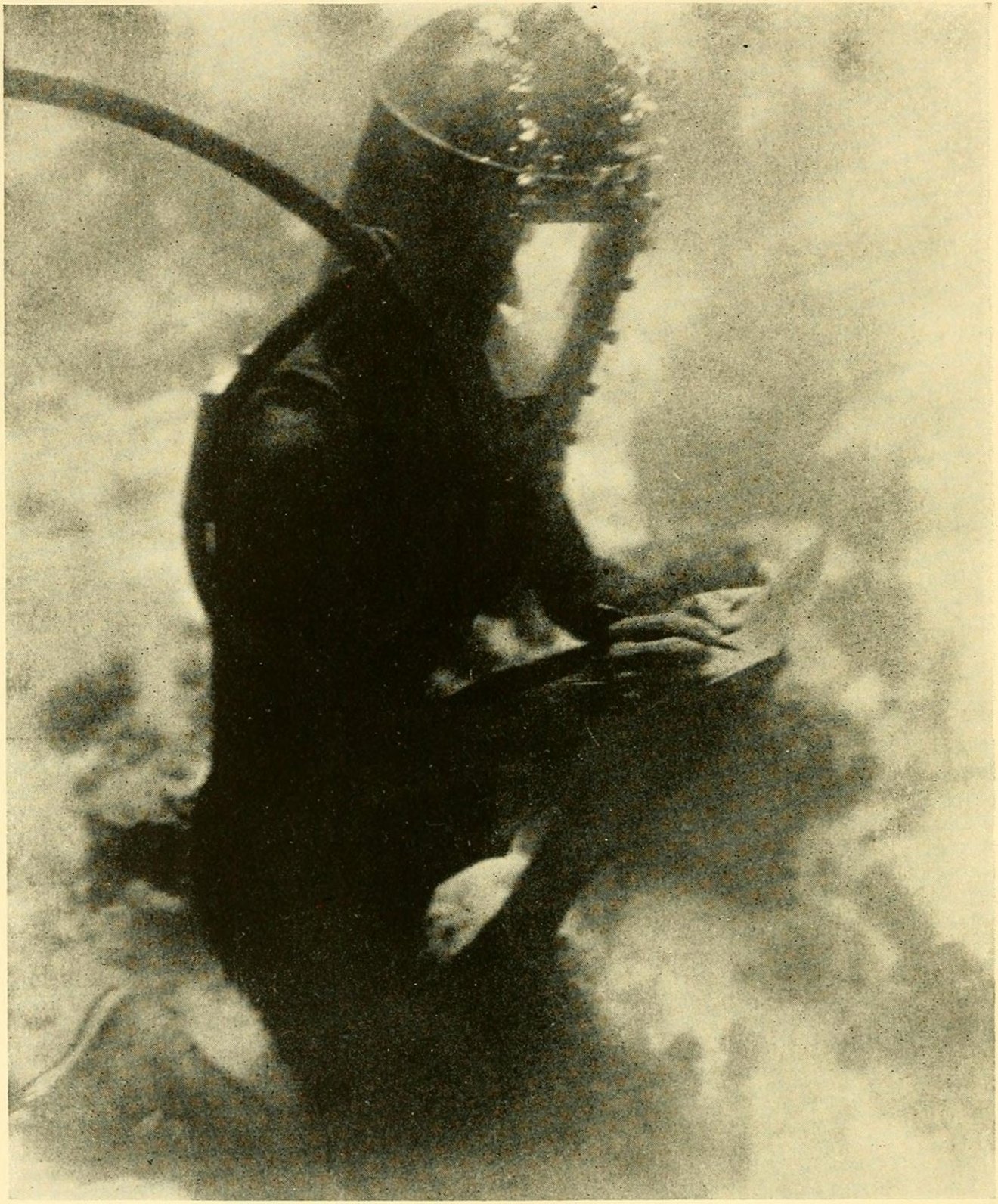
On a later trip, to Haiti, Beebe had Floyd Crosby shoot motion pictures of the coral reef while Beebe himself sat on the bottom in a diving helmet, writing notes on a zinc pad with a lead pencil.
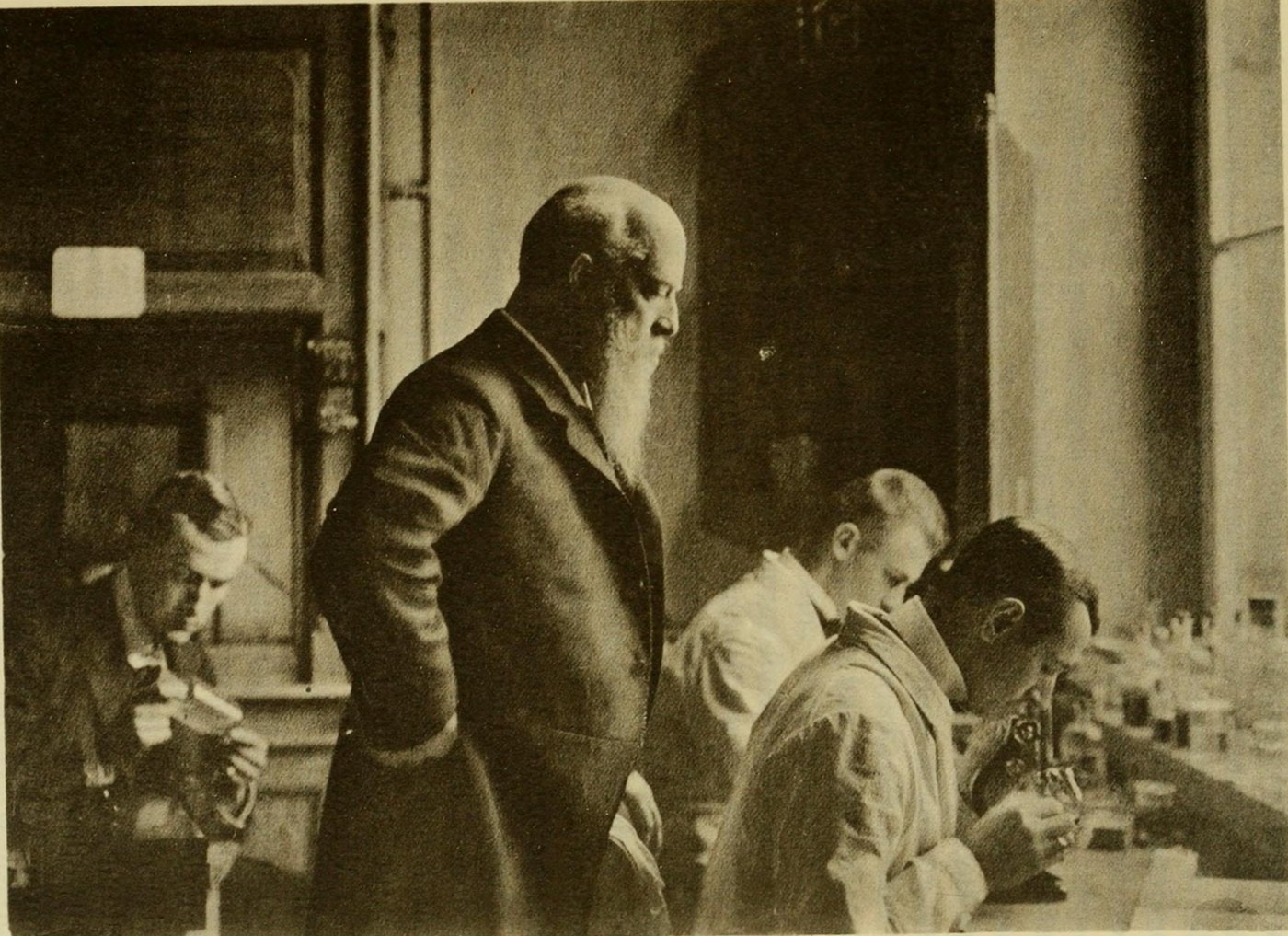
Carl Chun led the German deep-sea expedition on the Valdivia in 1898, and he drew too. Animals came up alive enough to paint, and he described getting the sky-blue inside their eyes down in color before it faded. When Chun died, Fritz Winter recalled that those fragile creatures had moved Chun as an artist as well.
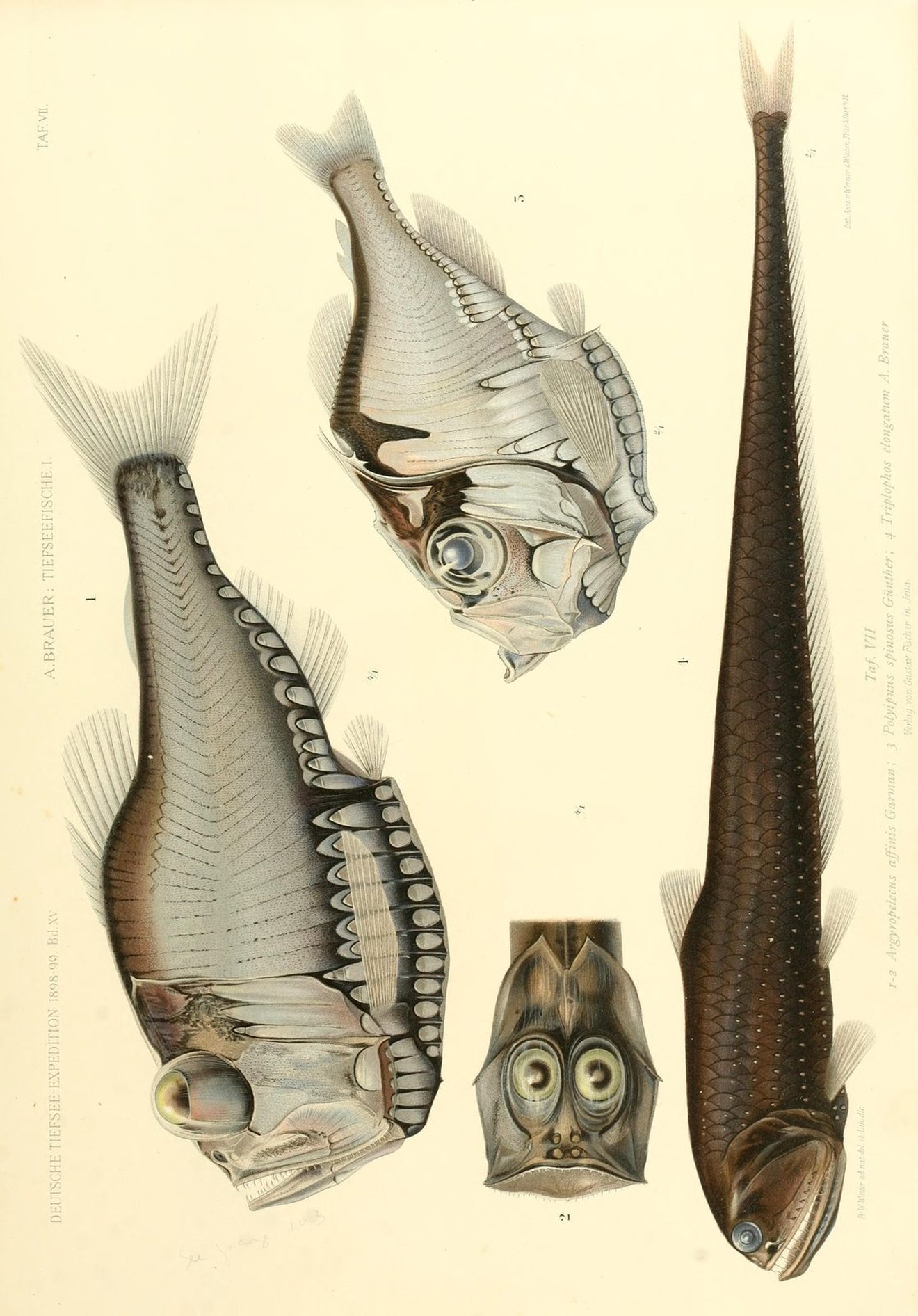
Winter sailed as the expedition’s scientific draughtsman and photographer, and he fitted out the ship’s darkroom himself. Brauer’s report on the expedition’s deep-sea fishes is his work, drawn from nature. The hatchetfish on the Hatchetfish tile is one of his.
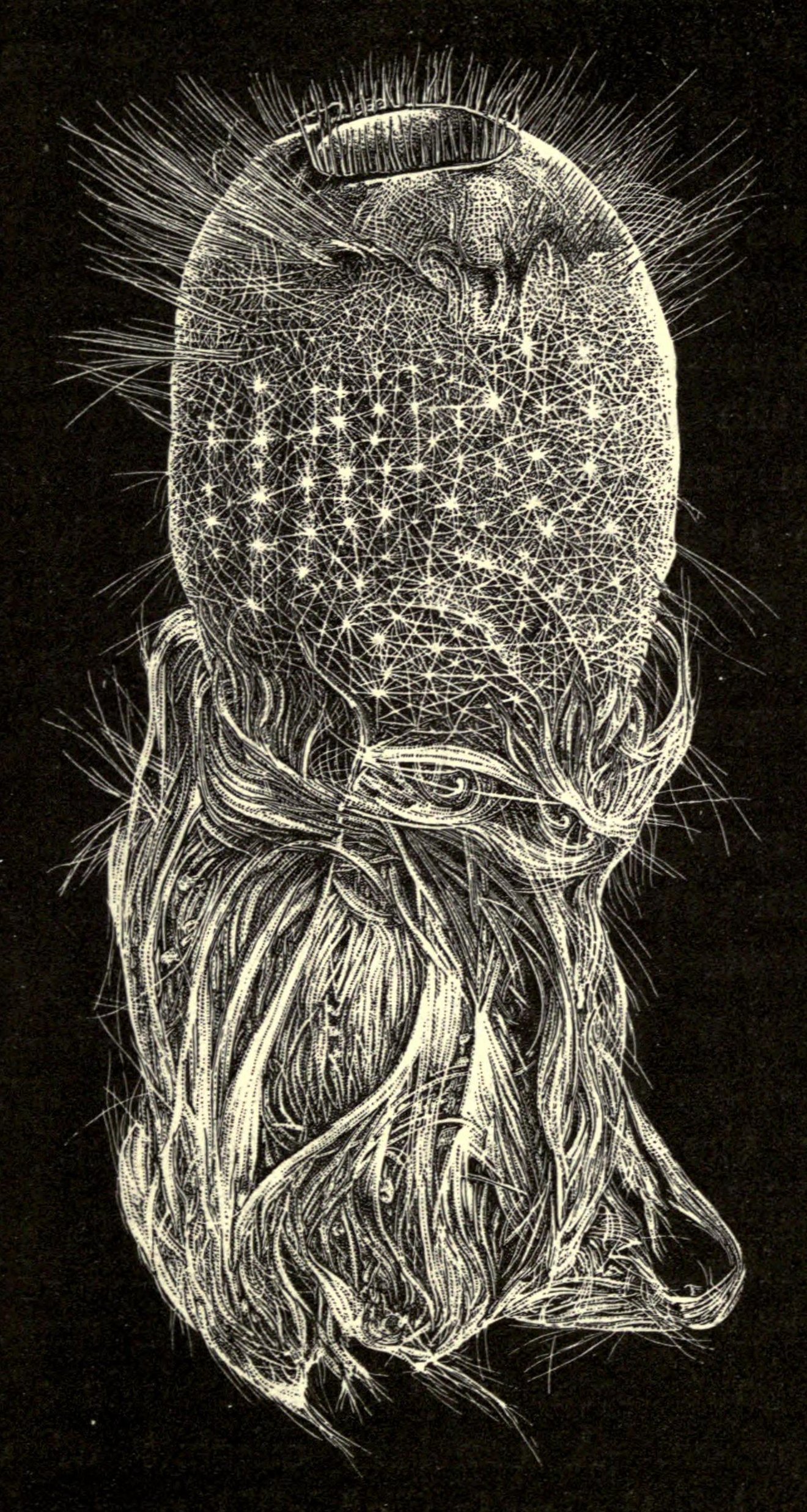
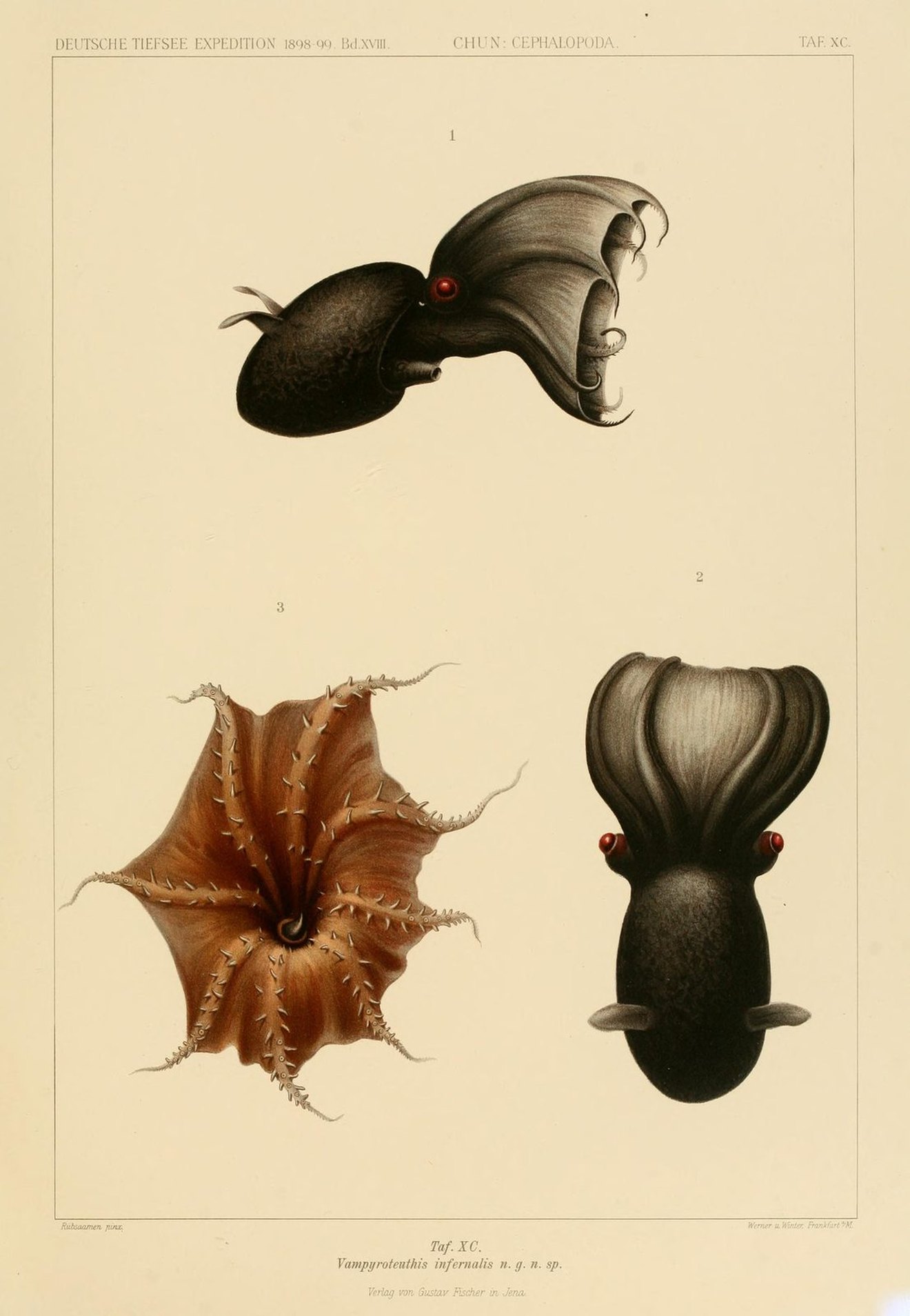
Then there’s Rübsaamen. His plates are only ever signed “Rübsaamen pinx.,” but his obituary fills in the rest: Ewald Rübsaamen, a trained drawing teacher who spent the winters after the Valdivia came home painting Chun’s squid and octopuses in watercolor, about a hundred plates’ worth. Over two hundred of his figures are in this archive. A fan favorite.

Adolf Giltsch never turns up in a picture at all. He started in his father’s lithography shop as a teen, and when he died, Haeckel counted more than four hundred plates Giltsch had drawn and lithographed for him. His name is on a hundred and fifty-one figures here, and I haven’t found a single photograph of him. His plates are The Portrait.
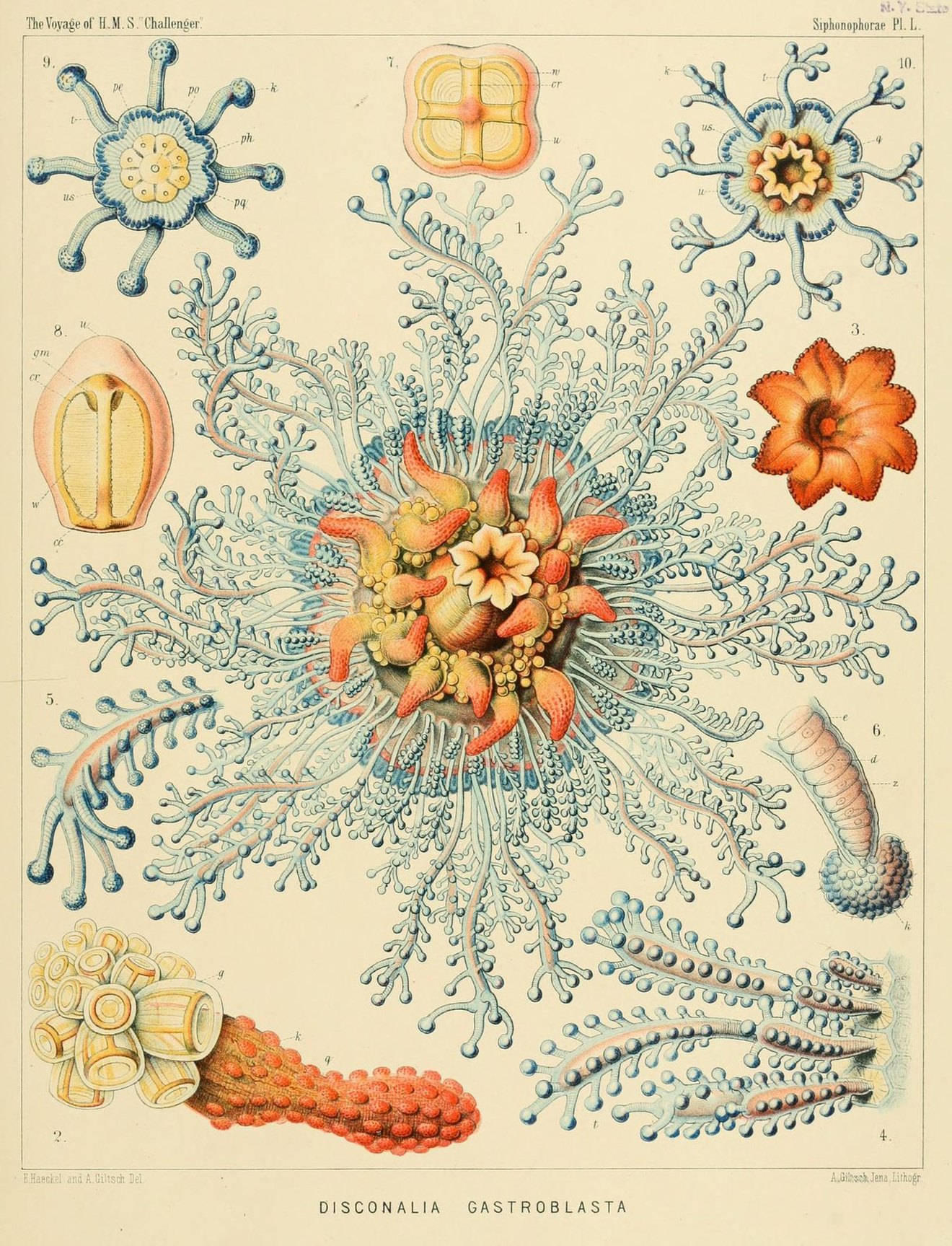
So this is my way of letting people know about them. I organized them the best I could, the same way I edit most of my show photos. Open any of them to see who drew it and the page it came from. The artists did the hard part.
Start at the top and keep going until the counter runs out at the seafloor. Take your time on the way down and see what awaits at the bottom for you to pursue next.